
There are two groups of vitamins, fat-soluble and water-soluble. The fat-soluble vitamins are A, D, E, and K. These are stored in the fatty tissue, liver, and muscles of the body. These vitamins are easily absorbed through the fat you eat, and therefore easier to overdose on then water-soluble vitamins.
The water -soluble vitamins are not store in the body. These include vitamin C and all the B vitamins. Since these are not stored in the body they need to be consumed daily. If you consume too much of these the body discards the excess through urine. The only exception to this rule is vitamin B12, which can be stored in the liver for many years. If enough of these vitamins are not consumed it can lead to a vitamin deficiency (more about this will be discussed later).
Choline and carnitine are not vitamins but are similar to vitamins and are also need by the body.
- Vitamin A
- Vitamin C
- Vitamin D
- Vitamin E
- Vitamin K
- Choline
- Carnitine
- Vitamin B1 aka Thiamine
- Vitamin B2 aka Riboflavin
- Vitamin B3 aka Niacin
- Vitamin B5 aka Pantothenic acid
- Vitamin B6 aka Pyridoxine
- Vitamin B7 aka Biotin
- Vitamin B9 aka Folate or Folic acid
- Vitamin B12 aka Cyanocobalamin
Blue - Fat Soluble
Green - Water Soluble
Functions
| Vitamin | Function |
| A | immune, growth and development, reproduction |
| C (L-ascorbic acid) | makes collagen, helps to absorb iron, helps immune system, protects cells |
| D | builds strong bones, helps absorb calcium, muscle, nerve, and immune function |
| E | protects cells from free radicals, boosts immune system |
| K | helps with blood clotting and healthy bones |
| B1 (Thiamine) | helps convert food into energy, growth development, and cell function |
| B2 (Riboflavin) | helps convert food into energy, cell function, growth development |
| B3 (Niacin) | helps convert food into energy and cell function and development |
| B5 (Pantothenic Acid) | helps convert food into energy, helps make and break down fats |
| B6 (Pyridoxine) | metabolism, immune functions and brain development during pregnancy |
| B7 (Biotin) | helps convert food into energy |
| B9 (Folate or Folic Acid) | helps make DNA and separate cells |
| B12 (Cyanocobalamin) | helps make DNA and prevent anemia |
| Carnitine | nutrient that converts food into energy |
| Choline | nutrient that regulates memory, mood, muscle movement, and nervous system |
Recommended Daily Amounts
| Vitamin | Recommended Daily Amount for Men | Recommended Daily Amount for Women |
| A | 900mcg | 700mcg |
| C (L-ascorbic acid) | 90mg | 70mg |
| D | 15mcg | 15mcg |
| E | 15mg | 15mg |
| K | 120mcg | 90mcg |
| B1 (Thiamine) | 1.2mg | 1.1mg |
| B2 (Riboflavin) | 1.3mg | 1.1mg |
| B3 (Niacin) | 16mg | 14mg |
| B5 (Pantothenic Acid) | 5mg | 5mg |
| B6 (Pyridoxine) | 1.3mg | 1.3mg |
| B7 (Biotin) | 30mcg | 30mcg |
| B9 (Folate or Folic Acid) | 400mcg | 400mcg |
| B12 (Cyanocobalamin) | 2.4mcg | 2.4mcg |
| Carnitine | body produces the amount that is needed | body produces the amount that is needed |
| Choline | 535mg | 450mg |
Deficiency
| Vitamin | Deficiency |
| A | night blindness, respiratory diseases, anemia |
| C (L-ascorbic acid) | scurvy, fatigue, gum inflammation, connective tissue weakness |
| D | osteomalacia and rickets |
| E | nerve or muscle weakness, loss of body control |
| K | bruising, increased bleeding, increase risk of osteoporosis |
| B1 (Thiamine) | weight loss, confusion, memory loss, muscle weakness, heart problems |
| B2 (Riboflavin) | hormone disorders, mouth sores, skin disorders, hair loss, liver disorders |
| B3 (Niacin) | red tongue, depression, headaches, tiredness, paranoid, apathy, rough skin |
| B5 (Pantothenic Acid) | burning in hands and feet, tiredness, irritability, sleeping problems, stomach pain |
| B6 (Pyridoxine) | anemia, skin itchy, depression, sensitive hearing, seizures |
| B7 (Biotin) | thinning of hair, rash around mouth, pink eye, seizures, skin infections, nervous system disorders |
| B9 (Folate or Folic Acid) | heart palpitations, fatigue, anemia, color changes in nails, and mouth sores |
| B12 (Cyanocobalamin) | tired, weak, anemia, heart palpitations, infertility, nerve problems |
| Carnitine | interactions with urinary tract infection, seizure, and antibiotic medications |
| Choline | muscle and liver damage, fat deposits in the liver |
Overdose
| Vitamin | Overdose |
| A | headache, blurred vision, dizziness, nausea, muscle aches, coordination problems |
| C (L-ascorbic acid) | diarrhea, nausea, abdominal cramps |
| D | muscle weakness, confusion, kidney stones, dehydration |
| E | increases risk of bleeding, hemorrhagic stroke |
| K | interact with blood clotting medications |
| B1 (Thiamine) | can interact with blood pressure and swelling medications, and chemotherapy |
| B2 (Riboflavin) | medication interactions that may interfere with nutrient absorption |
| B3 (Niacin) | low blood pressure, tiredness, high glucose levels, heartburn, blurred vision |
| B5 (Pantothenic Acid) | upset stomach and diarrhea |
| B6 (Pyridoxine) | nerve damage, loss of body movement, sensitivity to light |
| B7 (Biotin) | interact with hormone levels and some medications |
| B9 (Folate or Folic Acid) | nerve damage in the brain, nerves, and spinal cord |
| B12 (Cyanocobalamin) | interactions with some GERD and diabetes medications |
| Carnitine | nausea, diarrhea, fishy body odor, and muscle weakness |
| Choline | fishy body odor, heavy sweating, low blood pressure, and liver damage |
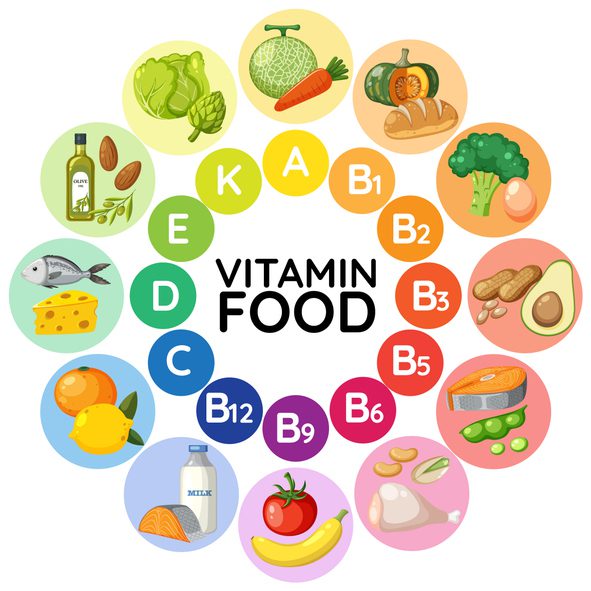
Food Source
| Vitamin | Food Source |
| A | beef liver, sweet potatoes, spinach, pumpkin, carrots |
| C (L-ascorbic acid) | red peppers, oranges, grapefruits, kiwis, green peppers, broccoli, strawberries |
| D | fortified foods, egg yolks, mushrooms, fatty fish, beef liver, and cheese |
| E | vegetable oils, nuts and seeds, green vegetables, and fortified foods |
| K | green leafy vegetables, vegetable oils, blueberries, figs, meat, cheese, eggs, and soybeans |
| B1 (Thiamine) | whole grains, fortified foods, pork, fish, black beans, soybeans, seeds, nuts |
| B2 (Riboflavin) | eggs, lean meats, organ meats, milk, mushrooms, spinach, fortified foods |
| B3 (Niacin) | meat, grains, legumes, nuts, fortified foods |
| B5 (Pantothenic Acid) | poultry, meats, organ meats, fish, eggs, milk, mushrooms, potatoes, broccoli, avocados, whole grains, peanuts, sunflower seeds, and chickpeas |
| B6 (Pyridoxine) | fortified foods and fiber |
| B7 (Biotin) | meat, eggs, organ meat, fish, nuts, seeds, sweet potatoes, broccoli, spinach |
| B9 (Folate or Folic Acid) | beef liver, asparagus, dark leafy greens, Brussel sprouts, orange juice, peanuts, black-eyed peas, and kidney beans |
| B12 (Cyanocobalamin) | shellfish, beef liver, milk, eggs, meat, poultry, fortified foods |
| Carnitine | red meat, dairy, poultry, fish, vegetables, fruits, and grains |
| Choline | meat, dairy, poultry, eggs, fish, broccoli, cauliflower, Brussel sprouts, whole grains, nuts, beans, and seeds |
Leave a Reply